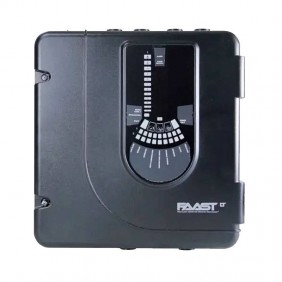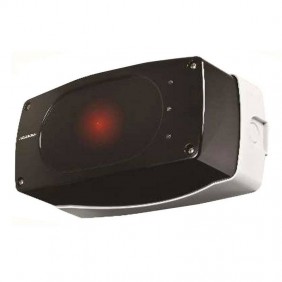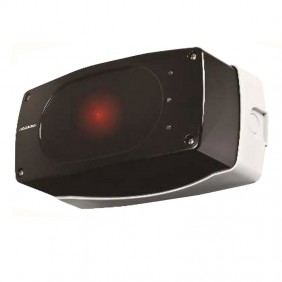
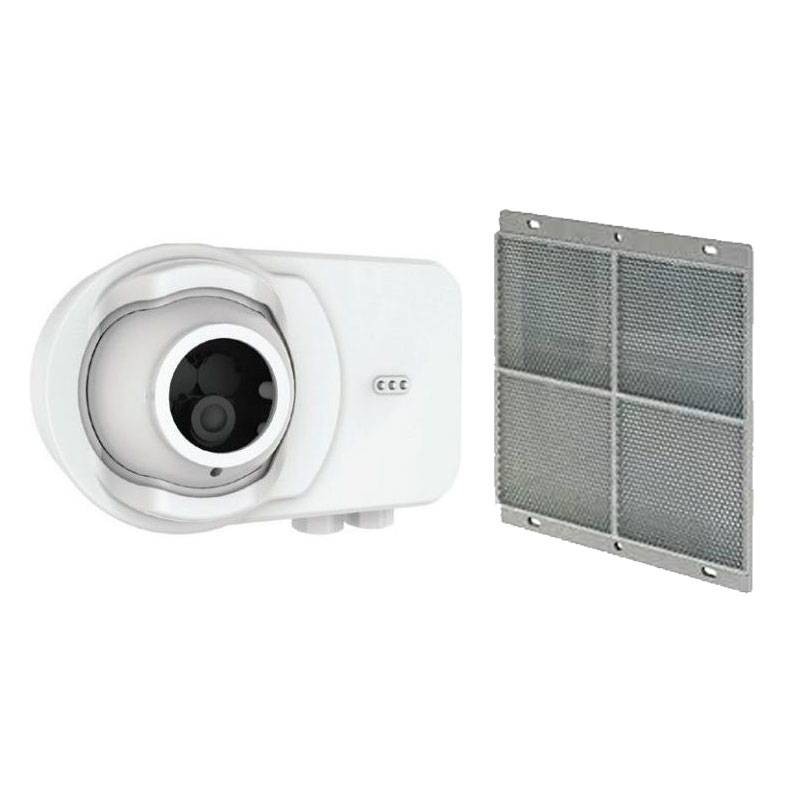
Notifier Linear Smoke Detector 5-100 meters OSI-RE-SS
NOT OSI-RE-SS
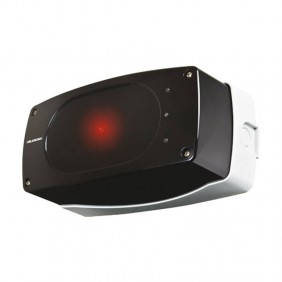
Notifier linear reflection smoke detector with CMOS technology:
- Composed of a single optical unit (TRX) and a reflector (included)
- Protection range of 5 to 100m with 12° operating range
- Drift compensation function with +/- 1° motion tolerance
- Equipped with built-in heater
- Automatic setting of sensitivity threshold level
- Intuitive beam alignment indicated by directional arrows
- Standby, fault and alarm LED indicators visible from front and bottom
- CPR certified in accordance with EN54-12
€619.73
€619.73
Out of stock
Incoming
€619.73
OSI-RE-SS is a linear smoke detector of the reflection type, designed to function as a component of fire alarm systems. The detector operates mainly on the principle of light obscuration using an infrared beam. Optical light transmission smoke detectors are particularly suitable for the protection of buildings with large open spaces such as those in warehouses, lobbies, etc. The OSI-RE-SS detector is a combined transmitter/receiver unit that can be directly connected to a conventional detection circuit.
Infrared transmitter and electronic image recorder-receiver:
- The infrared transmitter and electronic image-recorder-receiver generate a beam directed to a high-efficiency reflector. The reflector sends the beam back to the receiver where an analysis of the received signal is carried out. The change in power of the received signal is used to determine the alarm condition. The electronic image recorder-receiver has a wide field of view (FOV) of 12° and is able to adapt automatically if the building moves or if its supporting structure moves. Virtually, it is impossible for the receiver to lose the reflector from its own perspective in the absence of structural damage to the building. As a result of this operation, lOSI-RE-SS eliminates the number one cause of false alarms and/or anomalies typical of conventional light-transmitting linear detectors.
Optical filtration:
- Optical filtration, high-speed image acquisition and software algorithms ensure that the OSID-R system has higher levels of stability with excellent immunity to sudden changes in light. Therefore, the detector has a better response to sunlight and intrusion of objects in its field of view (FOV). Its wide field of view makes it ideal in narrow irradiance spaces, with a maximum clearance around the reflector of 40x40 cm, compared with 1x1 meter clearance normally needed in a transparent optical beam device. The detector does not provide alarms when saturated by direct or reflected sunlight or any other intense light source. In the worst case, the detector enters an anomaly mode, thus avoiding improper alarms typical of conventional linear smoke detectors. Thanks to the imaging technologies adopted by smoke detection algorithms, the detector does not provide improper alarms due to partial or sudden (rapid) beam interruption.
Alignment:
- Alignment of the detector is extremely intuitive, fast and accurate. Both the IR transmitter and the CMOS electronic image recorder are contained in the eyeball, which can be moved freely in any direction. The eyeball can be moved +/- 20° in the vertical direction and 50° in the horizontal direction. Four arrows indicating the direction in which to move the eyepiece bulb guide the user to find the perfect alignment the main unit and the reflector. To speed up the process for long distances, a laser tool can be inserted into the eyepiece bulb to quickly find the reflector. Once this rough alignment is achieved, the eyeball is fine-tuned for optimal alignment. Once fine alignment is achieved, indicated by all arrows and the LED lighting up in green, the eyeball is locked in place using the lever located on the side of the eyeball. A paintable cover is then placed over the front side to conceal the alignment arrows and locking mechanism and to secure the locking lever in a safe position. A unique feature concerns the automatic selection and setting of the detector sensitivity to the optimum level based on the reflector size measured in the FOV. The detector provides automatic variance compensation, whereby it can adjust its detection thresholds in line with any long-term beam signal reduction caused by contamination of the optical surfaces. A heating option is also offered inside the central unit to prevent condensation on the optical surface.
Data sheet
- Type: Smoke detectors