
Whether you live in a flat or a house, having a security system is now increasingly common, not only to try to prevent burglaries, but also to live more peacefully and manage your home remotely. But where do you start? How do you put together a complete and secure alarm system?
Index:
- Where to start: analyse your home
- The basic components of an alarm system
- How to choose products based on configuration
- Additional features for a complete alarm system
- Wired vs wireless systems: which is best today?
- Conclusions and final recommendations
Where to start: analyse your home
There is no single, universal way to put together your own security system. Every home, depending on its layout, will need different elements and in different quantities.
First of all, you need to evaluate your home by considering a few crucial points:
- Identify weak points: doors, windows, terraces, and garages. These are usually the most popular points of access for intruders
- Consider family habits: entry/exit times or presence of animals in the house
- Check the external environment: neighbourhood, gardens and secluded streets
These considerations will begin to clarify where greater security is needed and what needs to be protected.
The basic components of an alarm system
The fundamental components for creating an alarm system are:
- Alarm control panel: It is the brain of the system, managing signals from the sensors and activating the siren. Essential for operation.
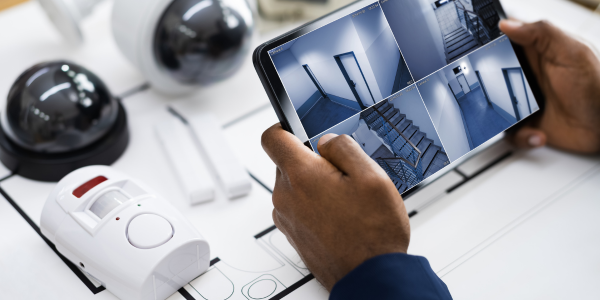
- Motion detectors (PIR): detect the presence of intruders inside the house. They are the main means of detection in indoor environments.
- Magnetic sensors: Placed on doors and windows, they signal unauthorised opening. Essential for perimeter protection.
- Siren: generates an acoustic signal to warn of the alarm and deter the intruder. It can be internal or external.
- Keypad o remote control: allows you to activate or deactivate the system manually. Essential for everyday use.
- Backup battery: allows the control unit and siren to operate even in the event of a power failure. Essential for operational continuity.
There are also advantages that improve management and security, but the system can also function without them.
- Outdoor perimeter sensors: protect gardens or terraces before intruders enter the building
- Security cameras: offer real-time or recorded video monitoring
- GSM/Wi-Fi modules: allow remote management and sending notifications to smartphones
- Double Siren: both indoor and outdoor
- Key switches and keys: to activate and deactivate the system
How to choose products based on configuration
Once we have understood the fundamental elements for creating an efficient security system and understood its functions, we can analyse how many we need based on the layout of the house.
- Alarm control unit: only one is needed because, as we have said, it is the hub of the entire system.
- Motion detectors (PIR): they should be installed in all main passageways, such as near the front door and secondary doors (e.g. garage door). Depending on the size of the flat, you may also decide to install them in corridors that serve as passageways between rooms, terraces and internal staircases. In short, in any area where an intruder could hypothetically need to pass through. However, how many areas to cover is at your discretion.
- Magnetic sensors: considering their function of signalling unauthorised openings, they must be placed on all doors and windows in the flat.
- Siren: it would be sufficient to insert only one, but if desired, both an internal and external one could be inserted.
Additional features for a complete alarm system
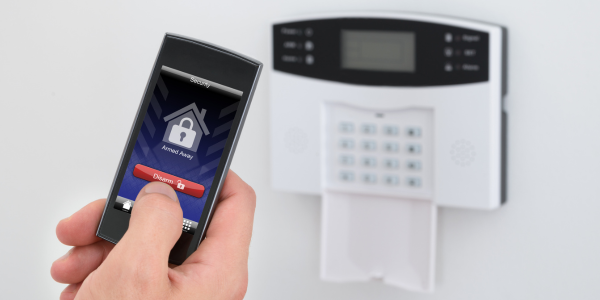
All modern security systems can be activated or deactivated according to your family’s needs. In most cases, control is conveniently carried out via a smartphone app, allowing remote management even when you are not at home.
However, if you do not have a smart connection, or if you want a simpler, manual method, you can install a key switch near the entrance: a practical solution for activating or deactivating the system by simply turning a physical key.
Pet-immunity sensors: safety even with animals in the house
If you have dogs or cats, it is important to choose pet-friendly motion detectors, designed to distinguish between the movement of a person and that of a small or medium-sized animal. This avoids annoying false alarms and still guarantees protection.
They are available for both indoor and outdoor use, so you can protect your entire home without compromising your pets’ freedom.
Outdoor devices: protection from water and weather
If you want to protect gardens, terraces, entrances or gates, it is essential to choose devices that are certified for outdoor use, i.e. capable of withstanding rain., dust and temperature changes.
Always check the IP (Ingress Protection) rating: for outdoor use, at least IP65 or higher is recommended.
Wired vs wireless systems: which is best today?
When creating the security system, there are two system options:
- Wired: more stable and durable, ideal for new builds or renovations
- Wireless: easy to install, flexible, no invasive work required
It is clear, therefore, that the choice could also be dictated by individual needs. If the house has recently been renovated, you may opt for a wireless system that is easier to install, while if there is ongoing work, you can decide which of the two options you prefer.
Conclusions and final recommendations
Putting together an alarm system requires attention, logic and knowledge of the environment to be protected. Start with a simple, expandable kit, choose certified products that are suitable for the context, and remember: security cannot be improvised, but is built step by step.
With the right system, your home will be safer, smarter and more secure.
You might also be interested in: