
A pressure vessel is a device that is used when the water pressure is too low. Thanks to this device, it is possible to increase the pressure even on the upper floors of a house or building where there are problems with the water flow rate.

In some areas, the more rural ones for example, there is still the problem of too low water pressure. This often disrupts the normal daily routine. It can happen, for example, especially on the upper floors of houses, that a trickle of water comes out of the tap, which is absolutely insufficient for any cleaning operation.
The solution in these cases lies in the installation of a pressure vessel. This device serves to compensate for the small amount of water coming from the supply network, so that we always have optimum service inside the house. Let’s see, in detail, how it works and when it is necessary to purchase a pressure vessel.
Index:
• Vessel and water pressure
• Pressure vessel and its components
• How does a pressure vessel work?
– Water collection
– Compressing water
– Water distribution
• Maintenance
Vessel and water pressure
Normally, the water pressure should be such that it delivers the right amount even on the upper floors of a building. In some places, however, this does not happen regularly. Either because of structural defects in the water system, or because, at certain times, there is a greater demand for water than the expected flow rate.
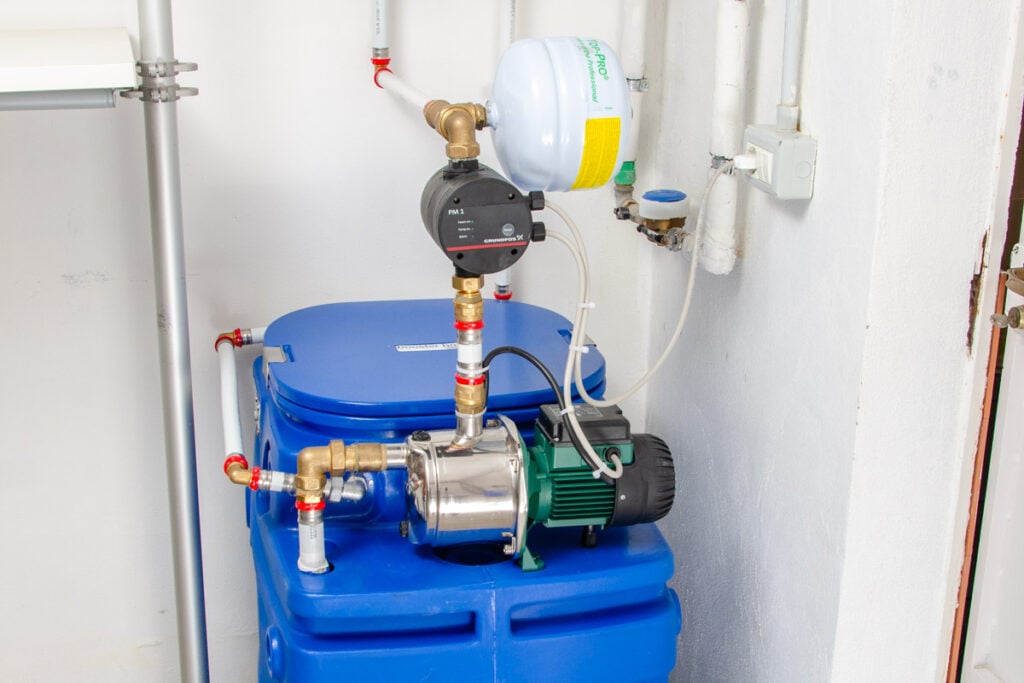
To overcome this problem, therefore, it is necessary to install a water pressure system, the size of which is, of course, determined by the volumes of water and pressures needed to serve certain flats.
Water is stored in a tank, and is then fed into the private system when the public water network is unable to meet its needs.
Pressure vessel and its components
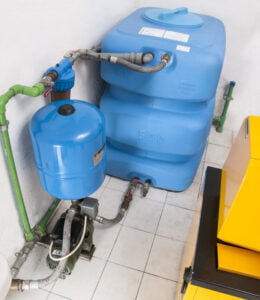 Before analysing and understanding how a vessel works, we need to understand what elements it consists of.
• Pump
• Pressure switch
• Tank
• Pressure vessel
All these components are, of course, fundamental. There is one, however, that is of greater importance: the pressure switch.
It is, in essence, the element that having detected low water pressure starts the pump, which will then push the water contained in the tank towards the private water system. Let now analyse the functioning of the pressure vessel, to understand how this device materially manages to bring the right water pressure into the flats, which would otherwise suffer.
How does a pressure vessel work?
In order to achieve the final objective, i.e. the increase in water pressure, all the elements that make up the pressure vessel move continuously and simultaneously. Basically, the operation of a pressure vessel consists of three phases.
1 – Water collection
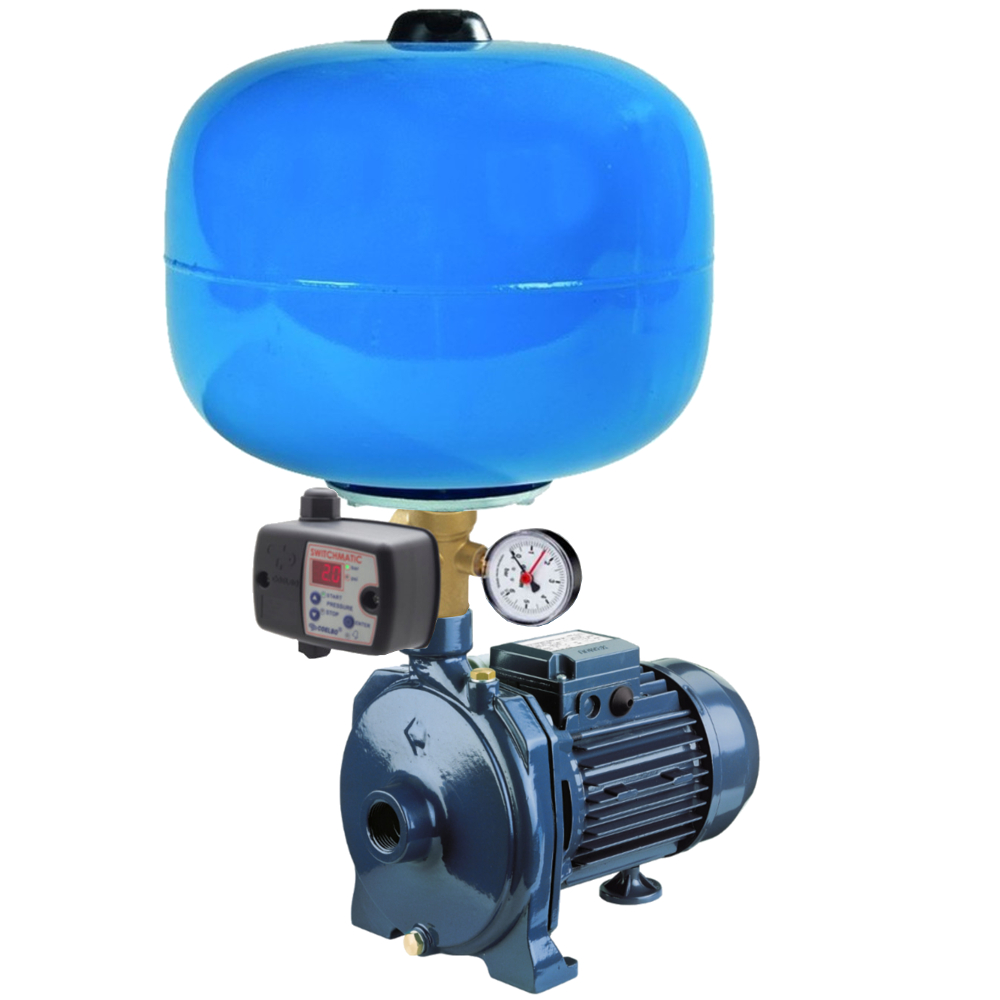
Initially, the function of the pressure vessel is to collect water from the public water supply network inside the tank. This is done by the electric pump and is triggered by the pressure switch, which activates the pump when it detects a water pressure below the limit for which it has been set. It is the same pressure switch that then switches the pump off when the water pressure level reaches the desired level.
2 – Compressing water
When water enters the tank, it is compressed so that the pressure rises. This happens due to the presence of an inner tube, which also has the task of keeping the pressure constant, preventing sudden drops.
3 – Water distribution
In the third and final stage of this process, the water is finally distributed to the home water system. When the pressure level has reached its maximum, the water is pushed to the various distribution points (fountains, taps, etc.).
Maintenance
Having a water pressure system, as we have seen, solves a major problem: that of lack of water, or low pressure being sprayed into a house, for structural and demand reasons. Fundamental, when having such a system, is maintenance. It must be done periodically by a qualified technician to avoid malfunctions and to keep the tank clean at all times.
You might also be interested in:
- Low hot water pressure: possible causes
- How hydraulic pumps work: how to choose the right one
- Differences between a boiler and a water heater: consumption comparisons